
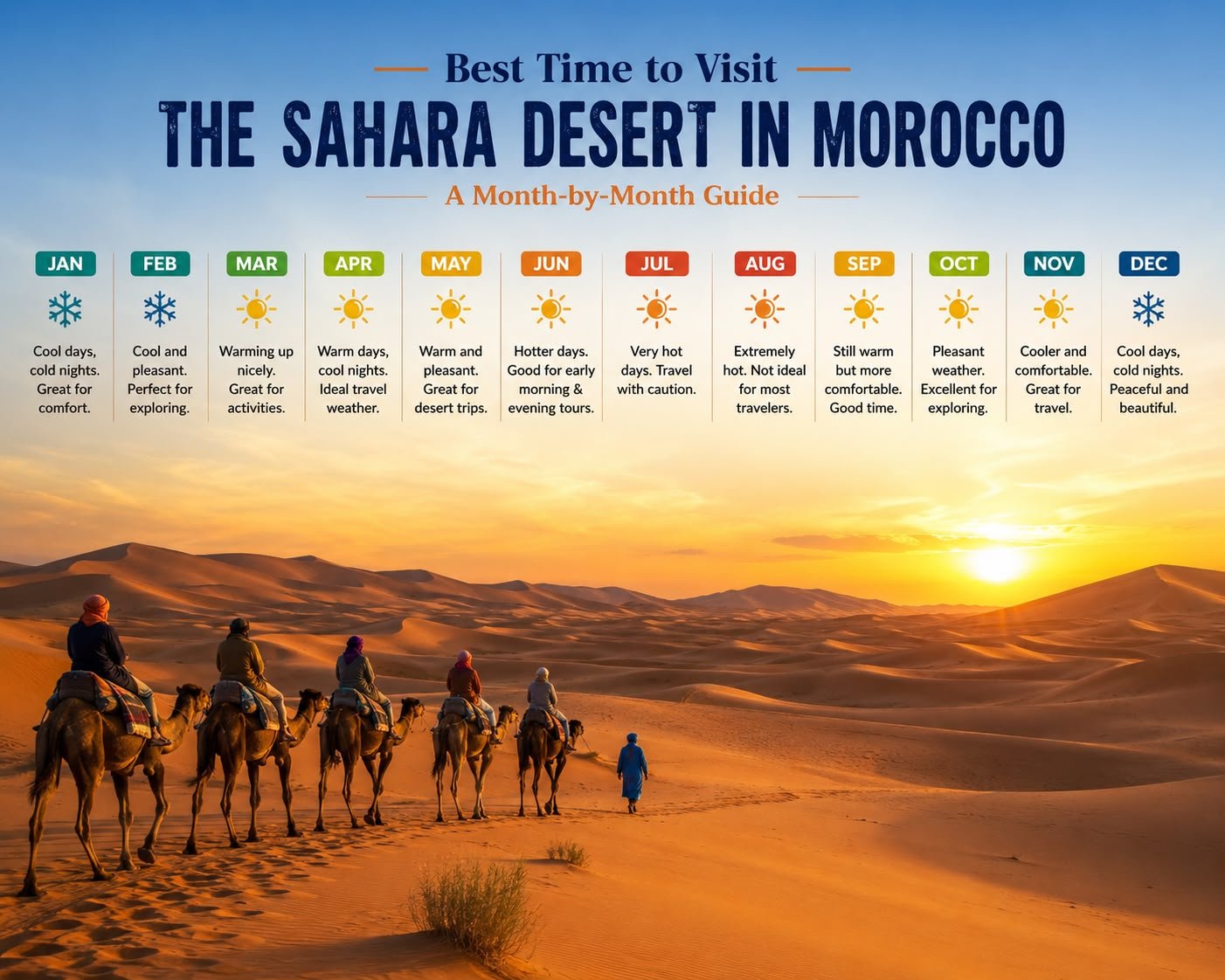
Best Time to Visit the Sahara Desert in Morocco: A Month-by-Month Guide
If you’re planning a trip with Explore Morocco Trips, one of the first questions you’ll likely ask is, “When is the best time to visit the Sahara Desert?” After all, timing can make a significant difference in comfort, visibility, and overall enjoyment during your desert tour. In this guide, we’ll walk you through the Sahara’s climate season by season, so you can choose the perfect time for your Morocco adventure.
Why Timing Matters for Your Sahara Desert Tour
The Sahara Desert, particularly around Merzouga and the Erg Chebbi dunes, experiences extreme temperature swings throughout the year. Consequently, choosing the right season isn’t just about comfort; it directly affects your camel trekking experience, the quality of nighttime stargazing, and even the clarity of those breathtaking sunset and sunrise views over the dunes.
Whether you’re joining our 3-Day Desert Tour from Marrakech to Merzouga, the 3-Day Desert Tour from Fes to Merzouga, or a longer Grand Tour from Casablanca, the season you travel in will shape your entire experience.
- 3-Day Desert Tour from Marrakech to Merzouga
- 3-Day Desert Tour from Fes to Merzouga
- 2-Day Sahara Desert Tour from Fes
- 10-Day Morocco Tour from Casablanca
Spring (March to May): The Ideal Season
Without a doubt, spring is widely considered the best time to visit the Sahara Desert. Daytime temperatures are pleasantly warm, typically ranging between 20°C and 30°C, while nights remain cool but manageable for camping. Additionally, the surrounding landscapes are at their greenest, with wildflowers occasionally blooming near oases along the route.
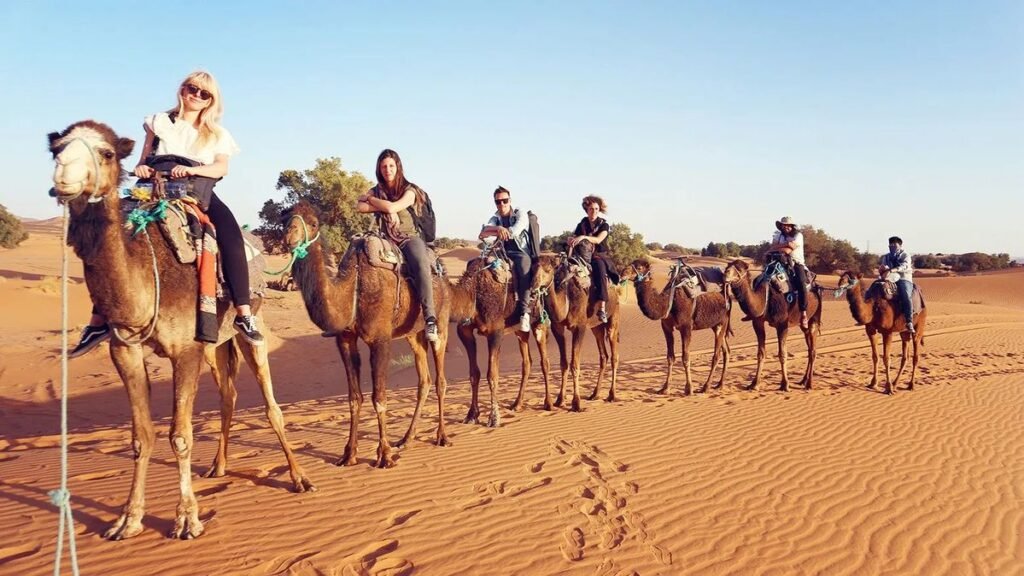
For travelers joining our 2-Day Sahara Desert Tour from Fes or any multi-day itinerary, spring offers comfortable conditions for both camel trekking and desert camp overnight stays, making it a favorite among first-time visitors.
Autumn (September to November): An Equally Excellent Choice
Much like spring, autumn provides another excellent window for exploring the Sahara. As summer heat fades, temperatures gradually cool to comfortable levels, and the desert light takes on a particularly golden quality that photographers adore. Furthermore, autumn tends to have fewer tourists than spring, meaning quieter dunes and a more intimate desert camp experience.
This season pairs wonderfully with our 5-Day Morocco Tour from Tangier to Marrakech or the 7-Day Morocco Tour from Fes, both of which include Sahara stops along their broader itineraries.
Summer (June to August): Hot, But Not Impossible
Summer in the Sahara is undeniably intense, with daytime temperatures frequently exceeding 40°C. That said, summer travel isn’t necessarily off the table, especially for early risers. Many of our travelers still enjoy summer desert tours by scheduling camel treks and dune walks during the cooler early morning or late evening hours, then resting during the peak afternoon heat.
If you’re set on a summer visit, we recommend our shorter desert itineraries, such as the 2-Day Sahara Desert Tour from Fes, allowing you to experience the highlights without extended exposure to peak daytime temperatures.
Winter (December to February): Cold Nights, Clear Skies
Interestingly, winter offers its own unique charm. While daytime temperatures remain mild and pleasant, often between 15°C and 20°C, nights in the desert can drop close to freezing. As a result, winter travelers should pack warm layers for the evening, particularly for overnight desert camp stays.
On the upside, winter skies over the Sahara are often exceptionally clear, making it one of the best seasons for stargazing. Many guests joining our 10-Day Morocco Tour from Casablanca during winter months describe the nighttime skies over Merzouga as one of the undeniable highlights of their entire trip.
Quick Reference: Best Months by Priority
- Best overall comfort: March, April, October, November
- Best for stargazing: December, January, February (pack warm layers)
- Best for fewer crowds: September, October
- Best for shorter, sunrise-focused visits: June, July, August
Final Thoughts
Ultimately, there’s no single “wrong” time to visit the Sahara Desert; each season offers a distinct experience, whether that’s spring’s comfortable balance, autumn’s golden light, summer’s dramatic heat, or winter’s crystal-clear night skies. What matters most is aligning your travel dates with your personal comfort preferences and the type of desert tour you’re hoping to enjoy.
At Explore Morocco Trips, our team is always happy to help you choose the ideal season and itinerary for your Sahara adventure, whether that’s a quick 2-day escape from Fes or a comprehensive Grand Tour from Casablanca.